Yes, wood expands a tiny bit when it gets hot, but heat is rarely the real cause. Moisture does most of the work. Warm, humid Georgia summers push water vapor into wood, and the wood swells. Dry winter air pulls that moisture back out, and the wood shrinks. That is why a door sticks in July and a hardwood floor gaps in January.
The team at Avalon Home Inspections breaks down how wood moves, what is normal, and which signs point to a bigger moisture problem in your home.
Does Wood Expand in Heat?
Yes, but only a little. Wood grows slightly when its temperature rises, the same way most solid materials do. That change is small. The bigger story is moisture.
Wood is hygroscopic, which means it takes in water vapor from the air and gives it back again. The U.S. Forest Products Laboratory explains that this moisture exchange depends on the air’s humidity and temperature, and on how much water the wood already holds. Many of the problems people have with wood come from changes in moisture content, according to the USDA Wood Handbook.
Here is the chain that matters:
- Warm air holds more water vapor than cold air.
- Humid air adds moisture to the wood.
- Wood with more moisture swells.
So when a drawer sticks on a hot July afternoon in Atlanta, humidity is the usual cause, not the heat itself. A hot, dry day barely moves wood at all. A warm, muggy day moves it a lot.
Why Moisture Moves Wood More Than Heat
Wood is made of tiny fibers with cell walls that soak up water. Below a point called the fiber saturation point, wood swells as it gains moisture and shrinks as it loses it. The Wood Handbook notes that this swelling and shrinking can lead to warping, checking, splitting, and gaps in flooring.
Wood also settles at a moisture level that matches the air around it. This is called equilibrium moisture content. When the air changes, the wood slowly changes with it. That is why wood movement follows the seasons instead of happening all at once.
| What changes | What it does to wood | How big is the effect? |
| Temperature alone | Slight thermal expansion | Small compared with moisture movement |
| Rising humidity | Wood absorbs moisture and swells | Large. Causes most sticking doors and tight floors |
| Falling humidity | Wood releases moisture and shrinks | Large. Causes most gaps and cracks |
| Direct water (leaks, spills, rain) | Fast, local swelling | Can be severe and lead to rot or mold |
Does Wood Shrink in Heat?
It can. Strong heat, or heat that lasts a long time, dries wood out. Dry wood shrinks. Moist wood that gets heated may grow a little at first from thermal expansion, then shrink as it loses water.
Wood also conducts heat poorly. The surface warms and dries faster than the core. That uneven drying creates stress, and stress can split the grain.
Watch for dry heat in these spots:
- Floors next to a heat vent or fireplace
- Cabinets beside an oven or dishwasher
- Wood trim and furniture in a sunny room
- A wood door that faces the afternoon sun
What Happens to Wood in Winter?
Wood usually shrinks in winter. Cold air holds less moisture than warm air. When you heat that air inside your home, it gets even drier. Dry indoor air pulls moisture out of wood, so boards get a little narrower.
You may notice:
- Thin gaps between hardwood floorboards
- Loose chair and table joints
- Doors that rattle in the frame
- Small cracks in trim, furniture, or cabinet panels
Cold alone makes wood contract slightly too, but the drop in moisture is the larger cause.
Outdoor wood can behave the other way. Georgia winters bring plenty of cold rain and damp days. Fence boards, deck boards, and exterior door frames that stay wet can swell instead of shrink. Wood that stays damp for long can also soften and rot.
| Season | Air conditions | What wood usually does | What you may notice |
| Summer | Warm and humid | Swells | Sticking doors and drawers, tight floorboards |
| Fall | Cooler and drier | Starts to shrink | Doors begin to loosen |
| Winter | Dry heated air indoors | Shrinks the most | Floor gaps, loose joints, small cracks |
| Spring | Rising humidity | Swells again | Gaps close, doors tighten |
How Much Does Wood Move?
Wood moves mostly across the grain, which means across its width and thickness. It barely changes along its length.
A common woodworking rule of thumb says a flat-sawn board can move about 1/4 inch for every 12 inches of width over a full humid-to-dry swing. A quarter-sawn board moves about half that. These are rough numbers, and the real amount depends on the species, the finish, and your indoor humidity.
| Direction | How much it moves | Where you see it |
| Along the grain (length) | Almost none | Board length stays about the same |
| Across the grain (width and thickness) | Most of the movement | Floor gaps, cupped tabletops, swollen doors |
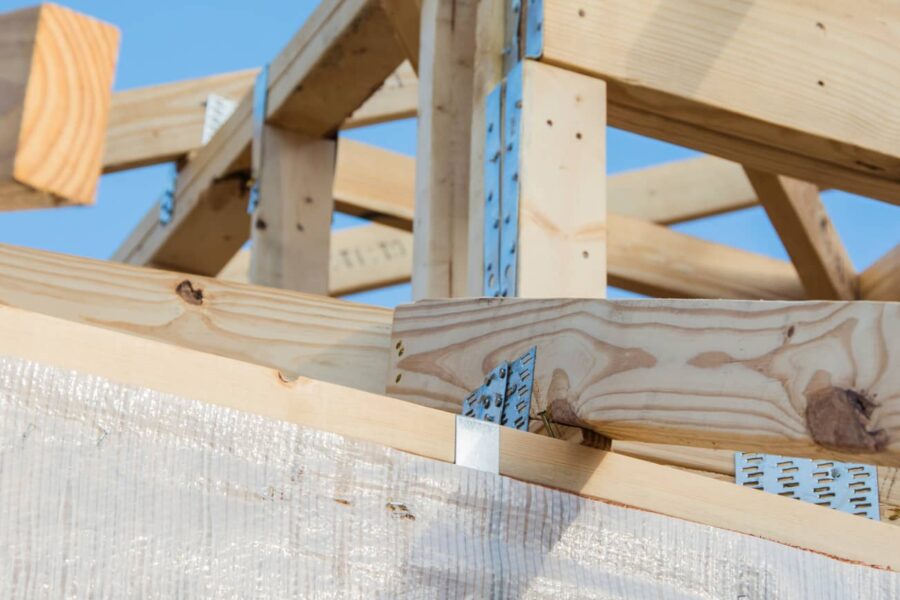
Framing lumber follows the same rule. A 2×4 gets a little wider and thicker in humid weather, while its length stays nearly constant.
Small movement adds up across a wide surface. This is why flooring installers leave a gap along the walls, and why baseboards and trim cover it.
Where You Will Notice Wood Movement in Your Home
Changes in humidity cause the wood throughout your home to swell in warm months and shrink in cooler ones. Here are the key areas where you will notice seasonal movement and what to watch for year-round:
| Item | Summer sign | Winter sign |
| Interior doors | Stick or rub the frame | Rattle or leave a wider gap |
| Hardwood floors | Tight seams | Thin gaps between boards |
| Cabinets and drawers | Drawers stick | Small gaps, loose panels |
| Trim and baseboards | Caulk lines bulge or crack | Gaps at corners and joints |
| Decks and fences | Boards swell, spacing tightens | Boards shrink, gaps widen |
Normal Movement or a Moisture Problem?
Normal seasonal movement is small. It shows up across the house and fades as the seasons change. A moisture problem is local, constant, or getting worse.
| What you see | What it likely means |
| Door sticks in summer, loosens in winter | Normal seasonal movement |
| Hairline floor gaps that close by spring | Normal seasonal movement |
| Floorboard edges lifting, cupping, or buckling | Possible moisture problem. Look for a water source |
| One door stays swollen all year | Possible moisture problem. Check for a nearby leak or high humidity |
| Wood feels soft or spongy when pressed | Possible moisture problem. This points to decay |
| Musty smell, dark stains, or visible mold | Possible moisture problem |
| Swelling near plumbing, windows, or exterior walls | Possible moisture problem. |
The EPA says controlling indoor moisture is the most effective way to control mold, which is why wet wood deserves a closer look. See the EPA’s guide to mold and moisture for more.
How to Keep Wood Stable Year-Round
You cannot stop wood from moving. You can keep the movement small and harmless.
- Watch your indoor humidity. A small hygrometer shows the level in each room. A common target is 30 to 50 percent. Use a humidifier when winter air gets dry, and run the air conditioner or a dehumidifier in muggy months. Big swings cause the damage, so aim for steady.
- Use your bath and kitchen fans. Steam from showers and cooking adds moisture fast. Run the fans during use and a few minutes after.
- Keep wood away from direct heat. Move furniture away from vents, radiators, and sunny windows. Curtains help with sun.
- Seal every side. Finish wood on all faces, including edges and the underside. A good finish slows the exchange of moisture. It will not stop movement, and it should not.
- Leave room to move. When you install floors, trim, or fence boards, leave the gap the manufacturer calls for.
- Let new wood adjust. Store new flooring in the room before installing it. Follow the maker’s directions on how long.
- Fix leaks and drainage fast. Clear gutters, send downspouts away from the foundation, and repair drips under sinks.
- Wipe up spills right away. Water that sits on wood swells it fast.
- Reseal outdoor wood. When water stops beading on a deck or fence, it is time for a fresh coat.
Fall is a good time to check seals, gutters, and humidity before heating season starts.
Related Questions to Explore
- How much does wood expand in heat? A tiny amount from heat alone. Most of the movement you see comes from moisture. As a rough guide, a flat-sawn board can move about 1/4 inch per 12 inches of width across a full humid-to-dry season, and a quarter-sawn board about half of that. Length barely changes.
- Does wood expand or contract in winter? Indoors, wood usually contracts in winter because heated air is dry and pulls moisture out of the wood. Outdoors, wood that stays wet from rain can swell. Keeping indoor humidity near 30 to 50 percent limits winter shrinkage.
- Does wood shrink in heat? Yes, when the heat is strong or lasts a long time. Heat dries wood out, and dry wood shrinks. Floors beside vents and furniture in direct sun are common examples. Gentle warmth with humid air tends to swell wood instead.
- Do wooden doors expand in the winter? Indoor doors usually shrink and loosen in winter. Exterior doors can swell when rain keeps them damp. If a door sticks in every season, the cause may be a leak or the house settling, not normal wood movement. See the signs of a weak foundation if more than one door sticks.
- How do you stop wood from expanding and contracting? You cannot stop it fully, because wood reacts to the air around it. You can limit it. Keep humidity steady, seal all sides of the wood, keep it out of direct heat and sun, and leave expansion gaps when you install it.
When to Call a Professional
Seasonal sticking and thin gaps are normal. Bring in a home inspector if you see floors cupping or buckling, wood that feels soft, stains that spread, a musty smell, or swelling that stays in one spot.
A full Avalon inspection covers the foundation, roof covering, attic framing and insulation, heating and cooling systems, water heater, and plumbing and electrical systems. That helps trace moisture back to its source. If you want lab-backed answers about mold, you can add a mold inspection to your home inspection.
Conclusion
Wood moves with the seasons, and moisture drives most of that movement.
- Heat causes only a small direct change in wood.
- Humid air makes wood swell, and dry winter air makes it shrink.
- Local, constant, or worsening swelling can signal a leak or a humidity problem.
If something in your home looks off, Avalon Home Inspections can help you find the cause before it grows. Call us or schedule online today!