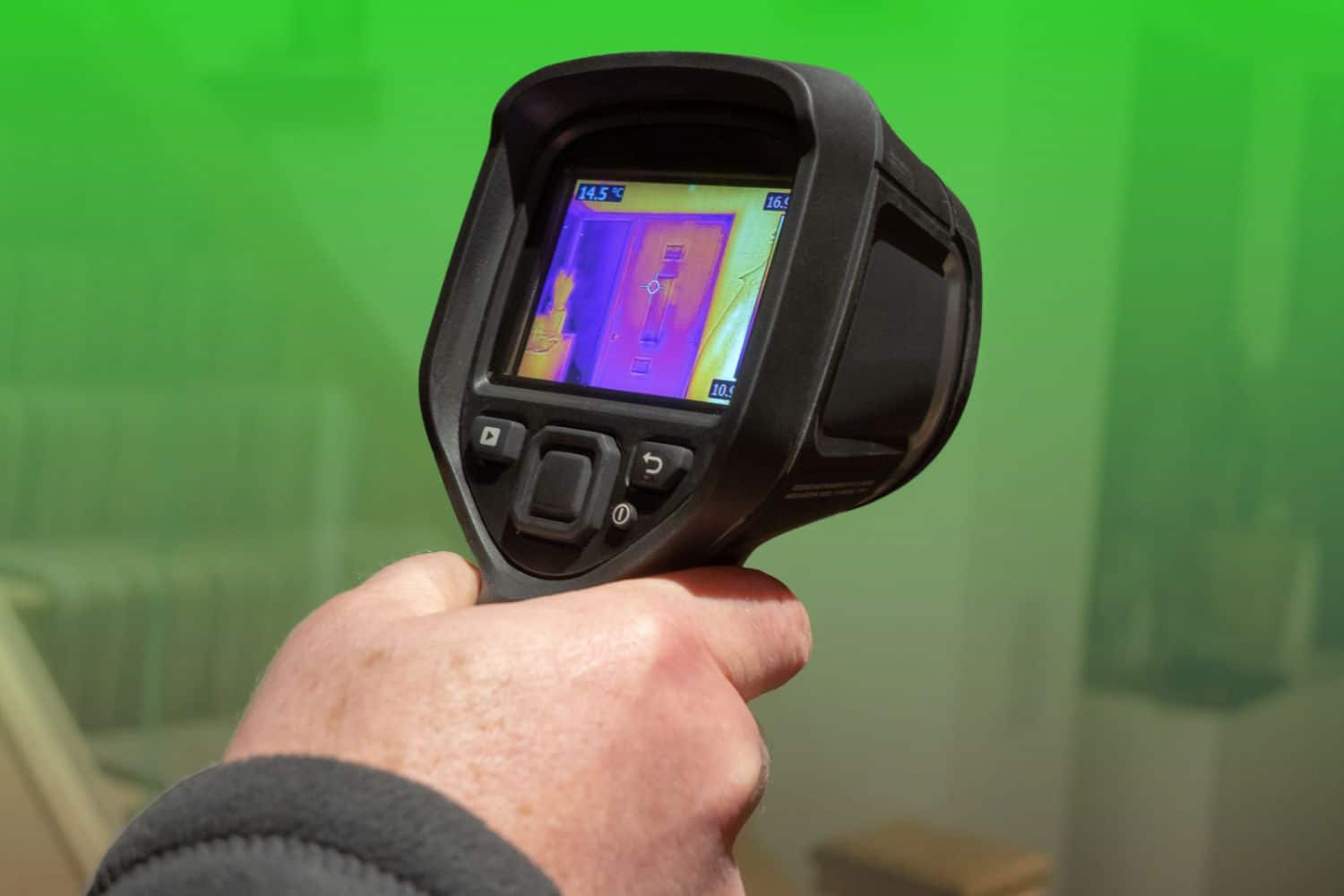
Infrared detection is a non-invasive scanning method that reveals surface temperature differences invisible to the naked eye. In a home, those temperature differences often point to real problems: hidden moisture, missing insulation, air leaks, and overheating electrical connections.
A trained inspector uses an infrared camera to translate those temperature patterns into a color-coded image, then investigates the anomalies that stand out. It is one of the few inspection tools that can flag a problem hiding behind a finished wall or ceiling without cutting into anything.
How Infrared Detection Actually Works
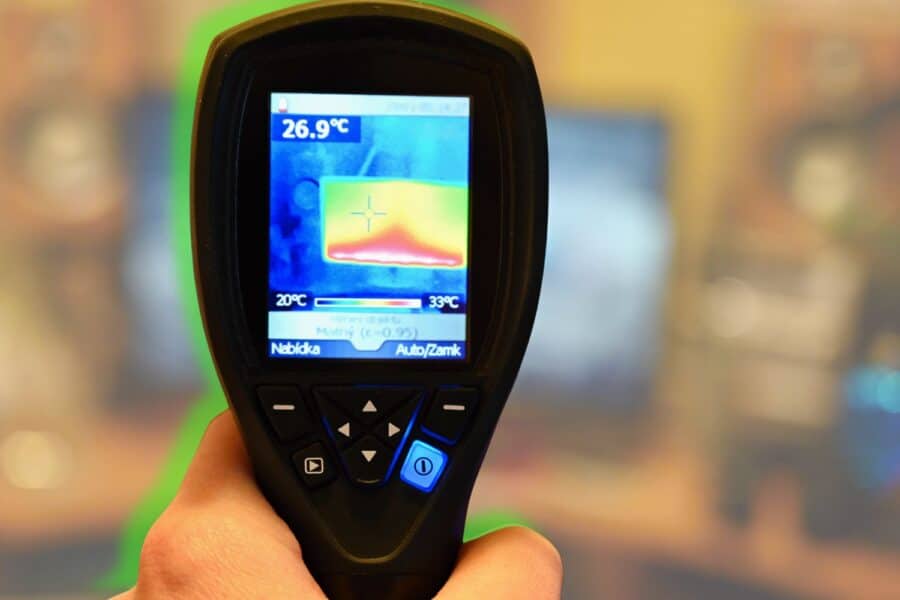
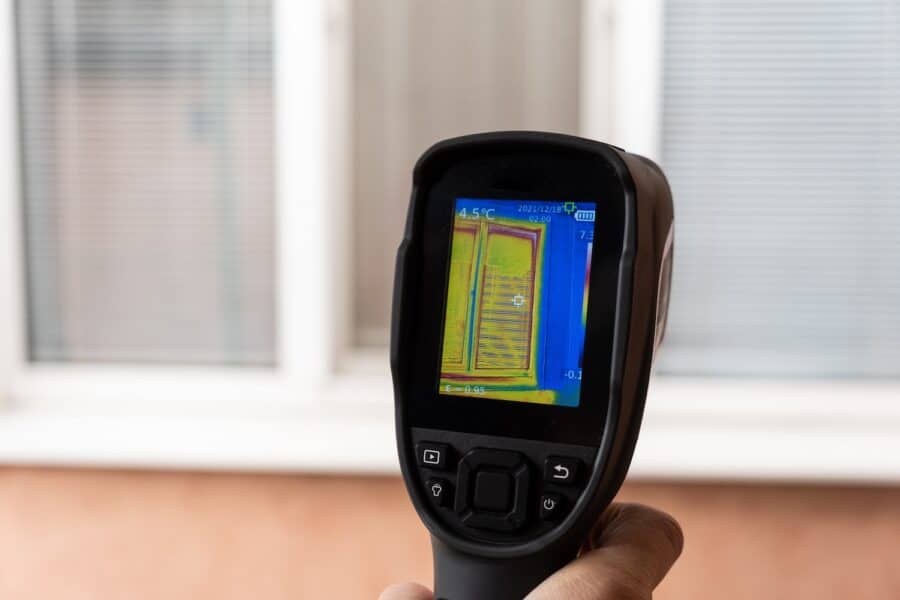
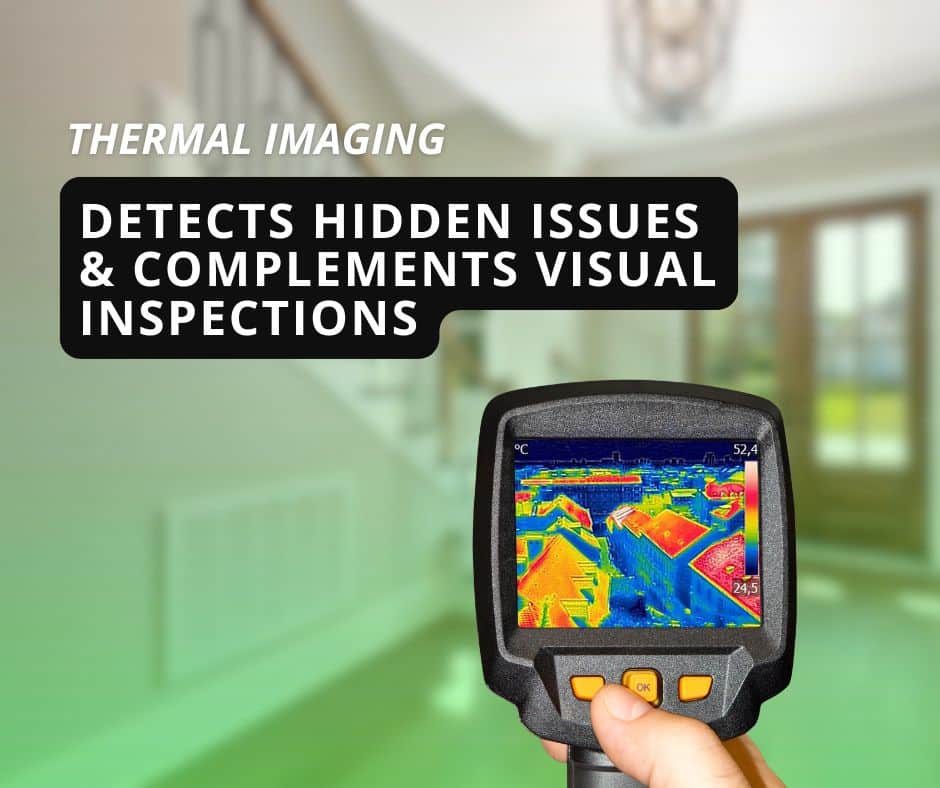
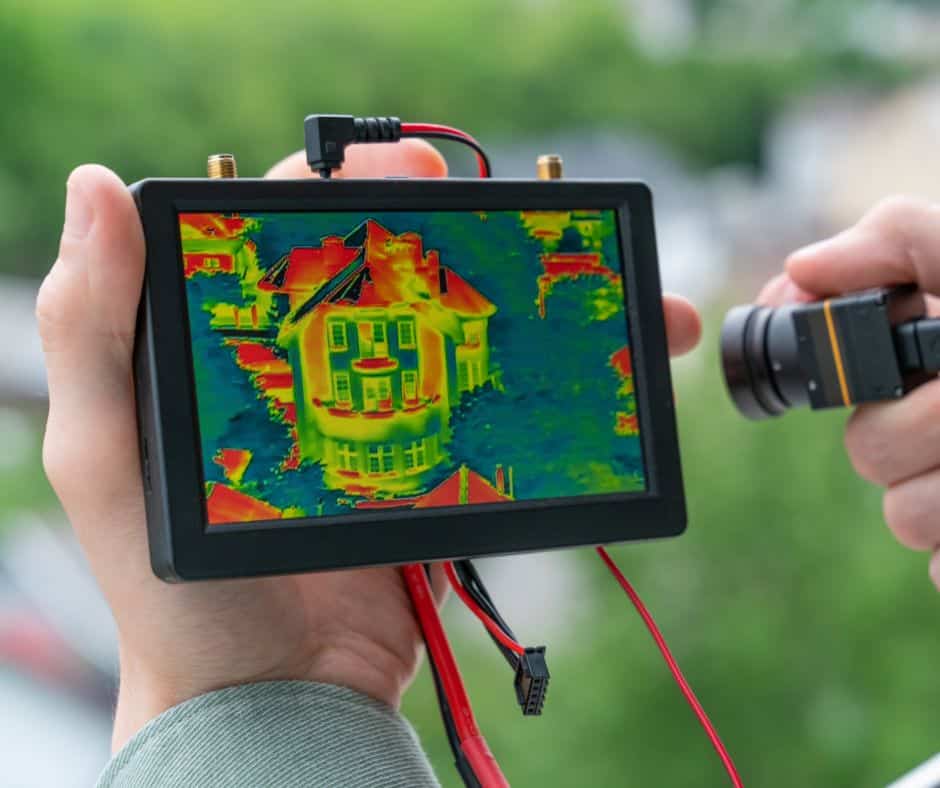
Every object gives off infrared energy, which is heat, even if it is too subtle to feel with your hand. An infrared camera captures that energy and converts it into a visual image where color represents temperature. Warmer areas typically appear as red, orange, or yellow, while cooler areas show up as blue or purple. Inspectors can adjust the exact color scale as needed.
People often describe this as looking at a room through “heat glasses.” The camera is not seeing through anything. It reads the surface temperature of whatever sits directly in front of the lens, whether that’s drywall, a ceiling, or an electrical panel.
Those surface readings become useful the moment they reveal a pattern that does not match what should be there. A cold streak running down an otherwise uniform wall is a good example.
What Infrared Detection Can Reveal
During a home inspection, infrared scanning is most useful for spotting these four categories of issues.
Moisture Intrusion
Water changes temperature more slowly than the surrounding building materials. Because of this, wet insulation, a damp subfloor, or the aftermath of a roof leak often shows up as a distinct cool spot. This makes infrared one of the more effective tools for catching leaks that have not yet caused visible staining or damage.
Missing or Inadequate Insulation
Gaps in insulation let conditioned air escape and outside temperatures transfer through the wall or ceiling more easily. On an infrared scan, this typically appears as an irregular patch or stripe pattern that follows the framing. The areas between studs with proper insulation read differently than the gaps without it.
Electrical Hot Spots
Loose connections, overloaded circuits, and failing components generate excess heat due to resistance. When an inspector scans an electrical panel with an infrared camera, an unusually hot breaker or connection point stands out clearly against the surrounding components.
This often happens before the problem becomes visible or noticeable by smell.
Air Leaks and Ventilation Gaps
Drafts around windows, doors, and attic penetrations create measurable temperature differences at the point where conditioned air is escaping. These typically appear as thin, defined lines rather than broad patches, which helps distinguish an air leak from an insulation gap.
What Infrared Detection Cannot Do
It’s worth being direct about the limitations of thermal imaging.
- It cannot see through walls. The camera reads surface temperature only. It cannot look inside a wall cavity the way an X-ray looks inside a body.
- It cannot see through stored items. Furniture, boxes, curtains, and clothing block the camera’s view of the surface behind them. Inspectors don’t need to move belongings to scan behind them.
- It needs a temperature difference to work. Most professionals recommend at least a 15-degree difference between the interior and exterior for exterior wall scans to produce meaningful results. A mild, temperate day can limit what the scan reveals.
- It cannot confirm the cause on its own. A cold spot might mean missing insulation, an air leak, or moisture. A trained inspector uses infrared as a starting point, then follows up with tools like a moisture meter to confirm what is actually happening.
- Recent dry conditions can hide old leaks. If more than about 48 hours have passed since it last rained, a past roof leak may have already dried enough that it no longer shows up clearly on a scan.
Best Conditions for an Infrared Scan
Timing affects how much a scan can reveal, and a few factors matter more than others.
- Temperature differential. As noted above, a bigger gap between indoor and outdoor temperature generally produces clearer results. Late fall through winter, or the height of summer with air conditioning running, tend to be the strongest windows for exterior wall scans in Georgia’s climate.
- Recent weather. A scan performed within about 48 hours of rainfall gives the best chance of catching an active or recent leak, since moisture that has had time to dry out can become harder to detect.
- Time of day. Direct sunlight can heat one side of a building unevenly, which sometimes masks or mimics a thermal anomaly. Inspectors often prefer scanning exterior surfaces earlier in the day or on overcast conditions to avoid this kind of interference.
- HVAC cycling. A system that just finished a heating or cooling cycle can temporarily skew interior readings, so inspectors typically account for how recently the system ran before interpreting a scan.
None of these conditions need to be perfect for a scan to have value, but an inspector who understands how they affect the results will get more out of the same walkthrough than one who does not.
Infrared Detection vs. a Visual-Only Inspection
| Category | Visual Inspection Alone | With Infrared Detection |
| Roof leaks | Found only if staining or damage is already visible | Can flag moisture before staining appears |
| Insulation gaps | Difficult to assess without opening walls | Pattern often visible directly on the scan |
| Electrical hot spots | Found only if damage, smell, or a visible fault is present | Heat signature can show a problem developing |
| Air leaks | Felt only if strong enough to notice by hand | Thin cool lines often visible along the leak path |
The table above doesn’t suggest that infrared replaces a standard visual inspection. It is a complement to it. Some of the most useful findings come from cross-referencing what the naked eye sees with what the camera reveals.
Why This Matters for Buyers and Sellers
For a buyer, an infrared scan can surface issues that would otherwise stay hidden until they become expensive. That might mean a slow roof leak, a section of wall with no insulation, or a breaker that is quietly running hot. Catching these early gives buyers real negotiating leverage or, at minimum, a clear picture of what they are taking on.
For a seller, scheduling an infrared scan before listing can flag issues worth addressing before a buyer’s inspector finds them. This can prevent last-minute renegotiations or a deal falling through over a surprise repair.
Energy Efficiency
Beyond leaks and safety concerns, infrared detection has a practical upside for anyone thinking about utility costs. Air leaks and missing insulation are two of the most common reasons a home costs more to heat and cool than it should, and both show up clearly on a thermal scan.
A homeowner who has an infrared scan done, whether during a purchase inspection or as a standalone energy assessment, walks away with a visual, room-by-room picture of exactly where conditioned air is escaping, rather than a general sense that “the energy bill seems high.”
That specificity makes it much easier to prioritize which fix will actually move the needle instead of guessing.
What to Expect During an Infrared Scan
- The inspector reviews conditions first. Weather, time since it last rained, and the temperature difference between inside and outside all affect how useful the scan will be that day.
- The inspector scans accessible areas. This typically includes exterior walls, ceilings, attic spaces, windows, doors, and the electrical panel.
- The inspector flags anomalies for follow-up. A cool or hot spot alone is not a diagnosis. The inspector typically follows up with a moisture meter or a closer visual check to confirm what is causing the pattern.
- The report documents the findings. It usually includes thermal images directly, along with an explanation of what the inspector found and why it matters.
Homeowners who plan to run infrared scans on their own, outside of a full inspection, sometimes wonder whether pests could show up on a scan too. The answer is sometimes yes.
A nest or a concentrated pest colony can generate a slightly different heat signature than the surrounding material. This is one reason inspectors occasionally flag an area for a pest control specialist to take a closer look, particularly in attics or wall cavities where they suspect wildlife activity.
Related Questions to Explore
- Is infrared detection the same as thermal imaging? Yes. Infrared detection, thermal imaging, and thermography all refer to the same core technology: capturing infrared energy and converting it into a visual temperature map. Home inspectors use the terms interchangeably.
- Does infrared detection work in any weather? Not equally well in every condition. Scans are generally most effective when there is a meaningful temperature difference between inside and outside, commonly around 15 degrees for exterior wall scans. Mild days or the period shortly after significant weather changes can limit results.
- Can infrared detect mold directly? No, infrared cannot detect mold itself. It detects the moisture that often allows mold to grow, which gives inspectors a strong clue to investigate further. Inspectors typically follow up with a moisture meter or a mold-specific test if warranted.
- How much does an infrared home inspection cost? Pricing varies by provider and region. Some inspection companies, like Avalon, include a thermal scan as part of a standard home inspection at no extra cost rather than charging for it separately.
- Is infrared detection required for a home inspection? No, most areas do not require it as part of a standard home inspection. Many still consider it a valuable add-on because of how much it can reveal that a visual-only inspection would miss.
When to Call a Professional
Say you already know you have a specific issue, like a suspected roof leak, an unusually high energy bill, or a breaker that keeps tripping. An infrared scan is a strong first step to pinpoint the source without opening up walls or ceilings unnecessarily.
It is worth calling a certified inspector rather than attempting DIY infrared work, since interpreting the color patterns correctly takes training. Two areas that read similarly on a screen can have very different causes, and a misread scan can send you chasing the wrong problem.
Conclusion
Infrared detection will not replace a thorough, hands-on inspection. But it gives inspectors a genuine edge in finding problems that would otherwise stay hidden behind a wall or ceiling until they become expensive.
Moisture, insulation gaps, electrical hot spots, and air leaks all leave a thermal signature. Catching that signature early is often the difference between a manageable repair and a major one.
If you are buying, selling, or simply want a clearer picture of your home’s condition in the Atlanta, GA area, Avalon Inspections includes a free thermal scan with every inspection.