Persistent dog smell almost always comes from odor trapped in porous materials, carpet padding, upholstery, and fabric, not from the dog itself. Surface cleaning and air fresheners only mask it temporarily because the odor source is still sitting underneath.
Getting rid of it for good means treating those materials directly, not just the air around them.
Why Dog Smell Lingers Even After You Clean
Dogs naturally produce odor-causing secretions, most noticeably from their ears and paw pads, as part of normal scent marking. That’s expected and manageable. The problem is what happens when that odor, along with dander, saliva, and the occasional accident, gets absorbed into carpet fibers, padding, and fabric.
Once odor compounds are trapped in a porous material, vacuuming and surface cleaning move around what’s on top without reaching what’s underneath. That’s why a room can smell clean right after cleaning and then smell like dog again within a day.
Start With the Real Source
Carpet is usually the biggest source of lingering dog smell in a home, because odor and moisture can soak through the carpet fibers into the padding beneath, where routine cleaning never reaches.
Work through these in order, from least to most intensive:
- Baking soda treatment: Sprinkle baking soda generously over the carpet, let it sit for several hours or overnight to absorb odor, then vacuum thoroughly.
- Enzyme cleaners: For areas with accidents or heavy odor buildup, an enzymatic cleaner breaks down the organic compounds causing the smell rather than just masking them, which regular carpet shampoo doesn’t do.
- Professional steam cleaning: For odor that’s worked its way into the padding, a deep steam clean reaches further than a vacuum or a spot treatment can.
- Padding replacement: If odor persists after cleaning and steaming, the padding itself may be saturated and need replacing. This is common in homes where a dog has had repeated accidents in the same area over time.
| Method | Best For | Effort | Cost |
| Baking soda | Mild, general odor | Low | Minimal |
| Enzyme cleaner | Accident spots, targeted odor | Low-Medium | Low |
| Steam cleaning | Odor trapped in padding | Medium | Moderate (DIY rental or pro service) |
| Padding replacement | Saturated, unresolved odor | High | Highest |
A rule of thumb: if a spot has had more than two or three accidents over its lifetime, plan on it needing padding replacement eventually. No amount of surface cleaning fully reverses that level of saturation.
Fabric, Upholstery, and Bedding
Furniture, curtains, and any fabric your dog regularly touches hold onto odor the same way carpet does.
- Wash removable covers, pet beds, and blankets on a hot cycle regularly.
- Vacuum upholstered furniture with an upholstery attachment, and follow with a fabric-safe enzyme spray on areas where your dog frequently lies.
- For non-removable upholstery, a fabric steamer can lift trapped odor the way carpet steaming does.
Improve Airflow and Air Quality
Once the trapped odor sources are addressed, air quality steps help keep smell from building back up:
- Open windows regularly to bring in fresh air and reduce indoor odor concentration.
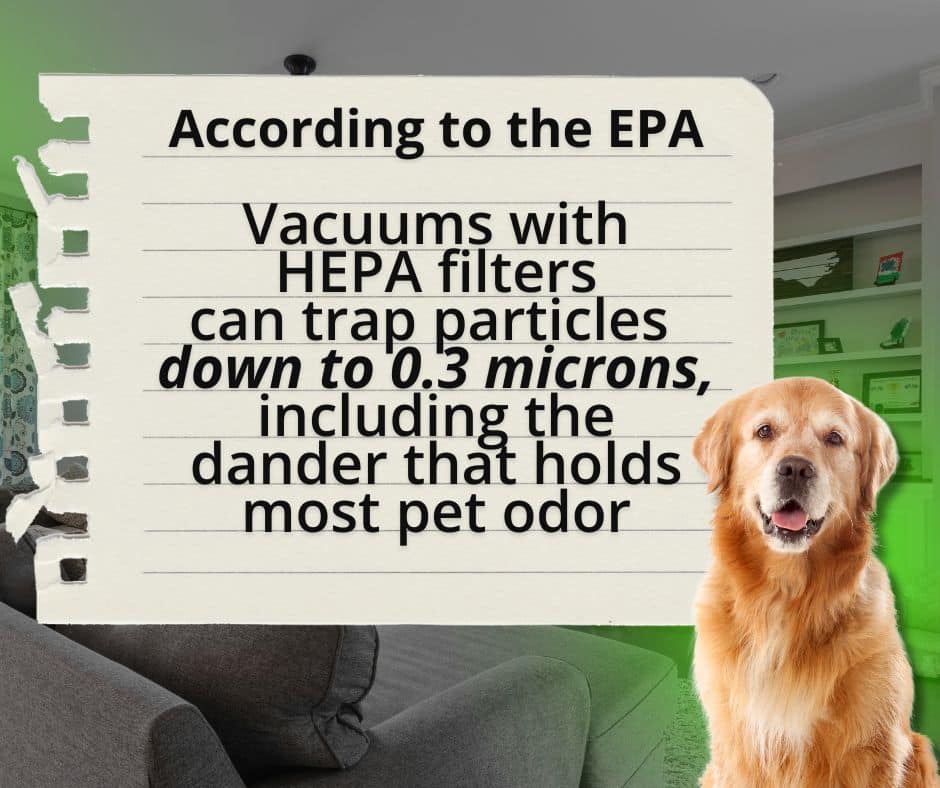
- Run an air purifier with a HEPA filter, ideally one rated for pet dander, in rooms your dog spends the most time in.
- Change HVAC filters more frequently than the standard schedule if you have pets, since dander and odor particles circulate through the system.
- Avoid relying on air fresheners or scented candles as a primary solution. They cover odor rather than remove it, and can make a room smell like a mix of two competing scents rather than actually clean.
Prevent It From Coming Back
Addressing the dog itself prevents new odor from building up as fast as you clean the old odor out:
- Regular bathing (following your vet’s recommended frequency for your dog’s coat type) reduces the oils and secretions that contribute to household odor.
- Routine ear cleaning matters, since ears are one of the most common sources of dog odor.
- Brushing regularly reduces loose fur and dander before it settles into carpet and furniture.
- Keeping your dog’s bedding washed on a consistent schedule prevents it from becoming its own odor source.
A simple weekly maintenance checklist:
- Vacuum carpet and upholstery in high-traffic dog areas
- Wash your dog’s bed and blankets
- Wipe down paws after outdoor time, especially in wet weather
- Check ears for odor or buildup
- Run the air purifier’s filter check, and replace it if due
Common Mistakes That Make Dog Smell Worse, Not Better
A few habits actually work against you without realizing it:
- Over-relying on scented products. Air fresheners and scented candles cover odor temporarily and can make a room smell worse once the fragrance fades and mixes with what’s underneath.
- Using regular carpet shampoo on accident spots. Standard shampoo cleans the surface but doesn’t break down the organic compounds enzyme cleaners target, so the odor often returns.
- Skipping the padding when deep cleaning. Steam cleaning the visible carpet surface without addressing what’s soaked into the padding underneath treats only half the problem.
- Bathing too frequently. Over-bathing can strip natural oils from a dog’s skin, which sometimes triggers the skin to overproduce oil in response, making odor worse rather than better.
How Humidity and Home Moisture Make Dog Smell Worse
Odor compounds become more volatile, meaning more noticeable, in humid conditions, which is one reason dog smell can seem worse on muggy days even without anything new happening.
Homes with elevated indoor humidity or moisture issues, whether from poor ventilation, a crawl space problem, or an HVAC system that isn’t dehumidifying effectively, tend to hold onto pet odor longer than well-ventilated homes. The moisture that carries odor compounds has nowhere to dissipate.
If odor seems disproportionately strong for how clean the home actually is, or persists no matter how much is cleaned, it’s worth having indoor humidity levels checked rather than assuming it’s purely a pet-cleaning issue.
Multi-Dog Households
Everything above still applies with more than one dog in the home, but the timeline compresses. Odor builds up faster with multiple dogs sharing the same carpeted areas, furniture, and bedding.v
That means the baking soda and enzyme steps in this guide may need to happen more frequently, and professional steam cleaning tends to become worthwhile on a shorter cycle than the single-dog households this same routine works for.
It’s also worth rotating which rooms dogs have full access to, if that’s practical for your household, simply to spread out wear and odor buildup rather than concentrating it in one or two rooms that end up needing padding replacement far sooner than the rest of the home.
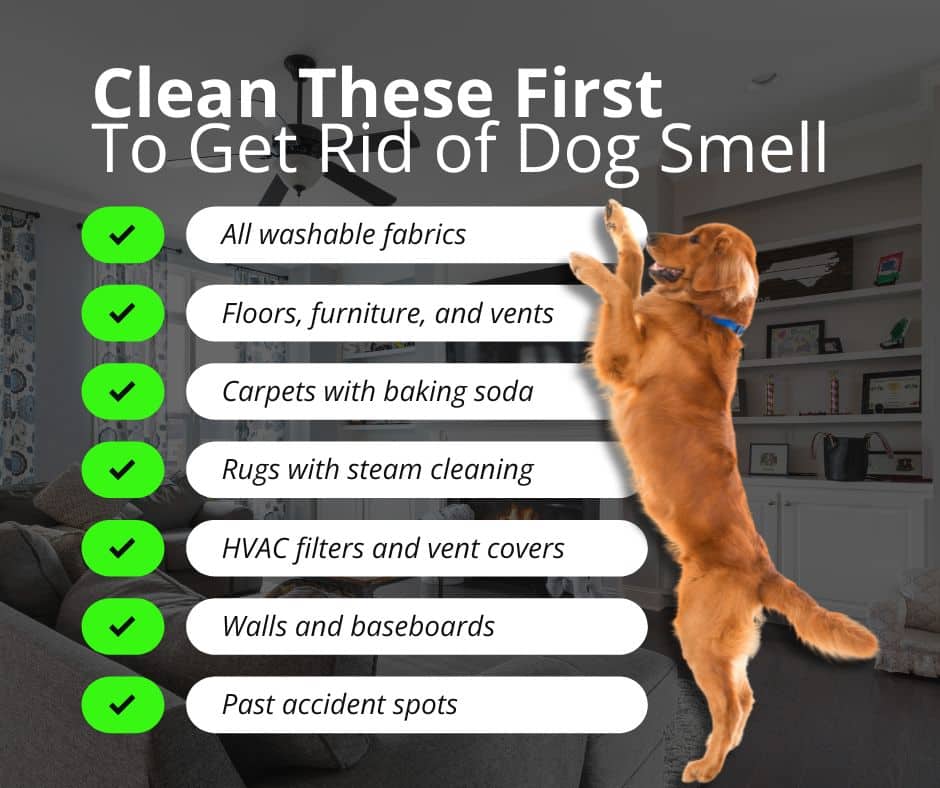
What Else Might Be Affecting Your Home’s Air Quality?
Pet odor is often just one piece of a home’s air quality picture. A few other common contributors:
- Humidity and moisture. Excess indoor humidity makes odors more noticeable and invites mold and mildew. A musty note under the dog smell is often moisture layering on top, not the pet.
- HVAC condition. A dirty coil or clogged filter recirculates dander and odor through every room instead of filtering it out, which is why some homes smell like dog everywhere, not just where the dog hangs out.
- Crawl space or basement air. Air from underneath the house can get pulled upward into living spaces. If that air carries moisture or mold, it adds to the overall odor.
- Ventilation gaps. Poorly ventilated homes trap odor instead of cycling it out, so smell lingers even with regular cleaning.
A home inspection looks at these underlying systems, HVAC condition, moisture, and ventilation in a way a cleaning routine can’t. If odor persists despite doing everything right, the better question is often what’s happening with the home’s air, not the carpet throughout the rest of the house.
A quick self-check before deciding which route to take:
| Symptom | Likely Cause | Recommended Step |
| Smell fades after cleaning, returns within days | Surface-level odor, not fully removed | Repeat enzyme treatment, more thorough vacuuming |
| Smell persists despite repeated deep cleaning | Odor trapped in padding or subfloor | Professional steam cleaning or padding replacement |
| Smell is stronger in one specific room or corner | Localized saturation (repeated accidents) | Targeted enzyme treatment, possible padding replacement |
| Musty or “off” smell mixed with pet odor | Possible moisture or humidity issue | Home inspection to rule out an underlying moisture problem |
Related Questions to Explore
- Why does my house still smell like dog after I clean it? Because the odor is likely trapped in carpet padding, upholstery, or fabric rather than sitting on the surface, where regular cleaning can’t reach it. Deep cleaning or enzyme treatment targets the actual source.
- What removes dog smell from carpet naturally? Baking soda is one of the most effective natural options: sprinkle it over the carpet, let it sit several hours to absorb odor, then vacuum thoroughly.
- Do air purifiers help with dog smell? Yes, especially HEPA models rated for pet dander, since they remove airborne particles that contribute to lingering odor, though they work best alongside cleaning the odor source itself, not as a replacement for it.
- How often should I bathe my dog to reduce house odor? This depends on your dog’s coat and skin type, so it’s worth following your vet’s specific recommendation, but consistent, regular bathing meaningfully reduces the oils and secretions that build up into household odor.
- Can dog smell mean there’s an underlying moisture problem in my house? Sometimes. If odor is unusually strong or persistent despite cleaning, it’s worth confirming the issue is pet-related and not compounded by excess humidity or moisture in carpet padding or subflooring, which can also produce musty odors.
When to Call a Professional
A few specific signs point toward calling in a professional rather than continuing the DIY route:
- The smell persists after 2-3 weeks of consistent deep cleaning. At that point, the odor has likely reached the carpet padding or subfloor, both of which usually need professional steam cleaning or padding replacement to fully resolve.
- The odor is stronger in one room than it should be, given how much time your dog actually spends there. Localized intensity often means a saturation point (repeated accidents in the same spot) that surface treatment won’t reach.
- The smell returns quickly after cleaning, even in areas your dog doesn’t frequent. This pattern points toward air circulation, not a fixed odor source, and usually means the HVAC system or overall ventilation needs a look.
- You’ve recently ruled out the obvious sources (bedding, favorite furniture, high-traffic carpet) and the smell is still present. At that point, the more useful move is assessing the home’s air quality systems rather than continuing to treat surfaces.
- There’s a musty or “off” note layered under the pet smell. This is a common tell for a moisture or humidity issue, not a pet issue, and calls for a home inspection rather than another round of enzyme cleaner.
Conclusion
Persistent dog smell almost always traces back to odor trapped in something porous, carpet, padding, or fabric, not the dog itself. Treat the source materials first, then tighten up air quality and grooming habits, and most cases clear up for good. If the smell keeps coming back despite doing everything right, that’s usually a sign the problem has moved past cleaning and into your home’s systems.
Not sure which one you’re dealing with? Avalon Home Inspections can take a full look at your home’s air quality, from HVAC condition to crawl space moisture, and tell you exactly what’s driving the smell. Schedule your inspection today!